
To document water damage in a rental apartment, get urgent help first, then photograph the visible condition from a safe location, record when you noticed it, and save the actual maintenance request and replies. Keep later observations under the same room and spot label. A useful record separates what you saw, what someone reported, and what remains unknown.
You do not need to diagnose a pipe failure or determine who is responsible. The goal is to leave a clear sequence another person can follow: the affected place, the changes you observed, the notice you sent, and the follow-up you received.
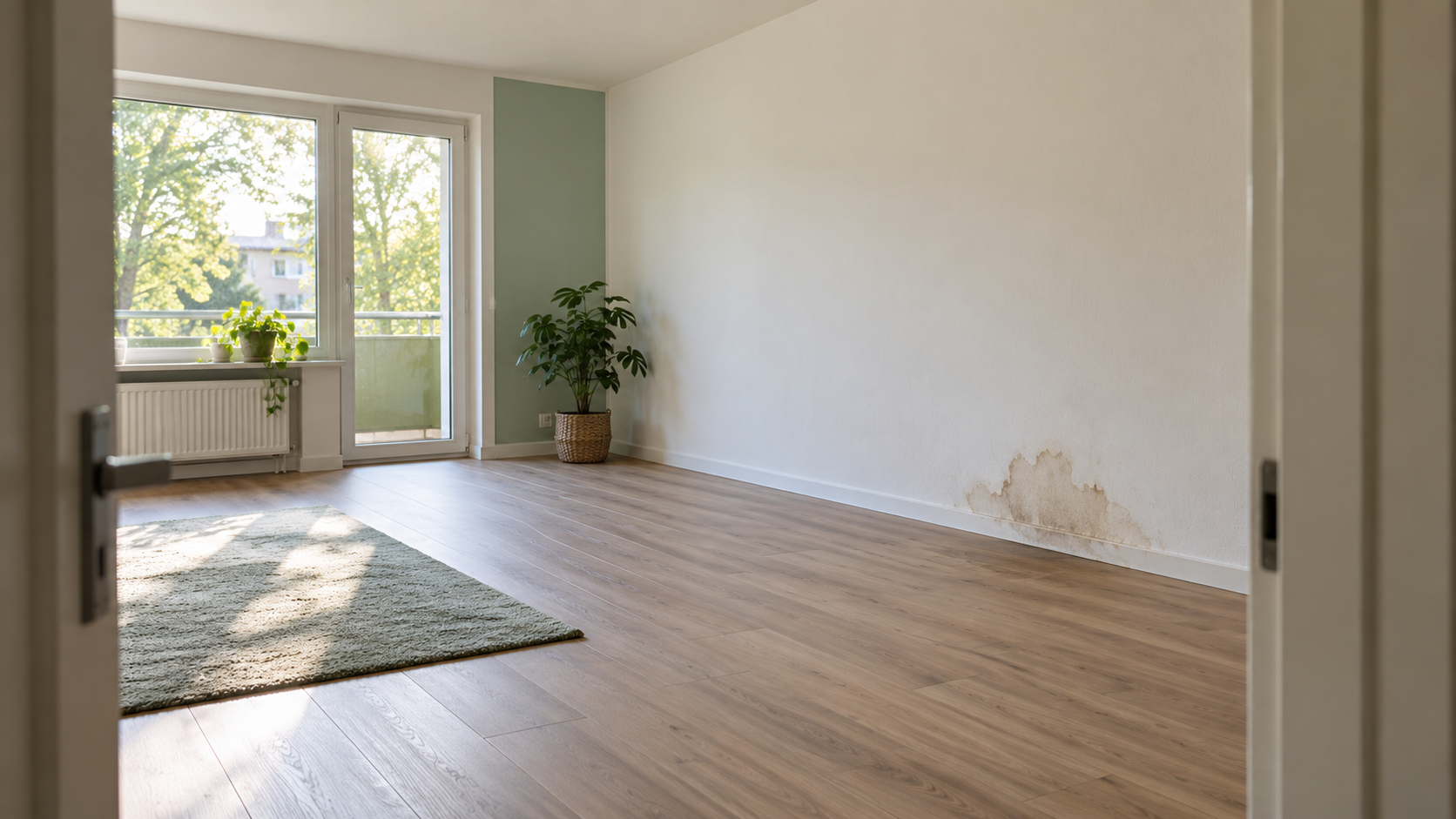
Get help before building the photo record
Do not delay an emergency call, evacuation or urgent maintenance report while you look for a better camera angle. If there is immediate danger, move to safety and contact emergency services. Otherwise, use your building's emergency maintenance instructions for an active leak or an urgent condition.
Water near outlets, appliances or electrical equipment requires particular caution. The CDC's electrical-hazard guidance says not to enter standing water to reach a power switch and not to operate electrical equipment while standing in water. Do not approach the area just to photograph it.
Set a safe boundary for photographs
Stay on accessible, dry ground. Do not stand beneath a sagging ceiling, climb to inspect a stain, open a wall, move electrical equipment or enter another unit. If a useful detail cannot be captured safely, write “not photographed because access was unsafe.” That is a complete observation, not a missing task you must finish.
This guide covers record organization. It does not tell you how to shut down building systems, dry materials or decide when a damaged area is safe to occupy. Follow the instructions of emergency responders and qualified maintenance personnel.
Photograph location, visible condition and nearby context
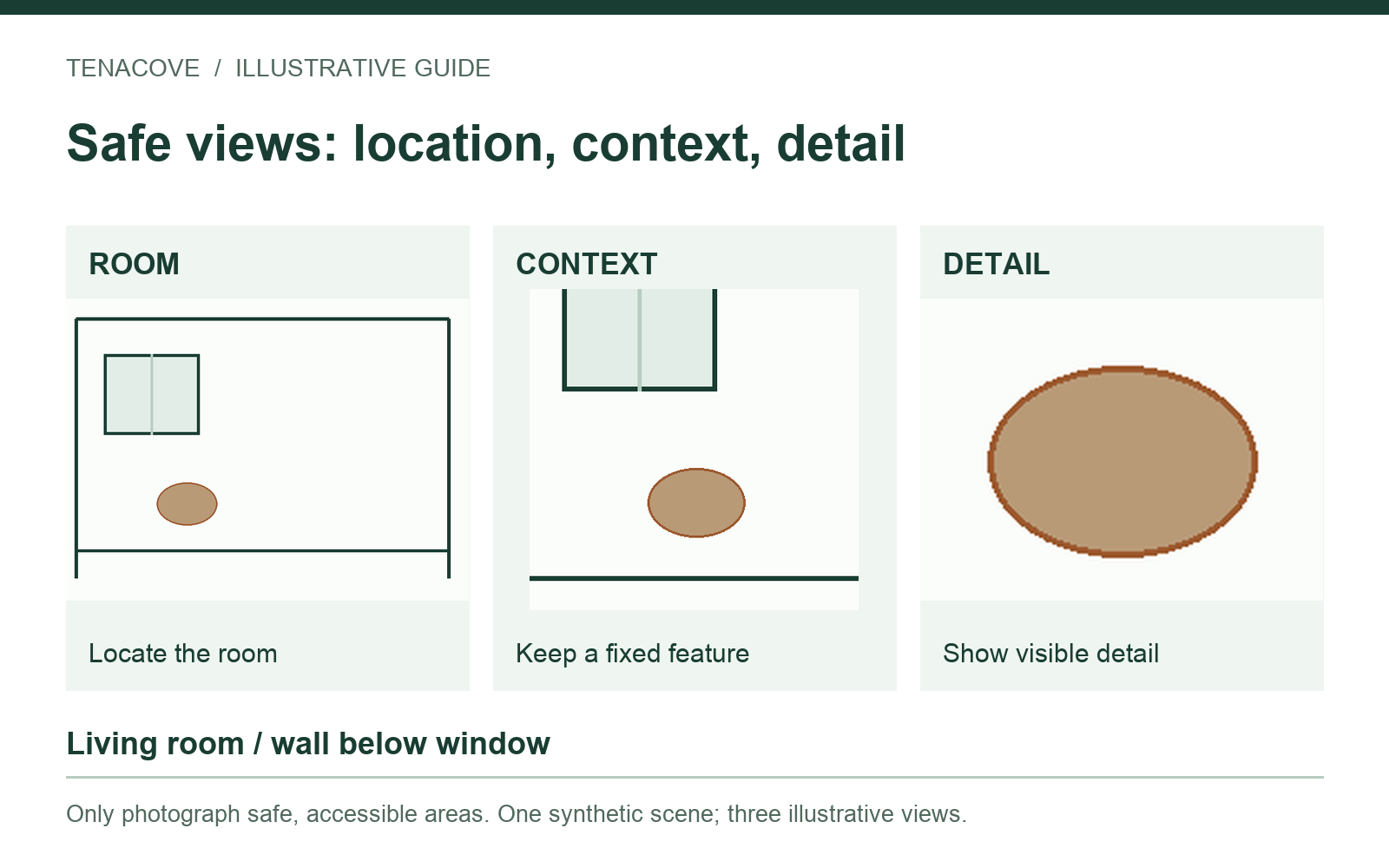
Once it is safe, start with a room view. Then take a context photo that connects the affected area to a fixed feature, followed by a detail if you can get it without approaching a hazard. A tight image of a brown patch is hard to place later; the same patch beside an identifiable window frame is easier to understand.
| What to record | Useful view or note | Limit to preserve |
|---|---|---|
| Affected room | Wide view from a safe doorway or dry position | Areas outside the frame have not been documented |
| Specific wall, ceiling or floor spot | Context view with a fixed feature, then visible detail | A photo does not reveal concealed moisture |
| Visible water, stain or surface change | Describe droplets, discoloration, peeling or swelling you can see | Do not assign a cause or material diagnosis |
| Nearby belongings | Record visible condition and item identity if safely accessible | Ownership, value and insurance coverage need separate records |
| Access restriction | Note a closed area, furniture obstruction or unsafe approach | Do not move hazards to complete the checklist |
| Later visible change | Repeat the safe viewpoint and use the same room/spot label | A changed appearance does not certify a repair |
Give one affected place one consistent name
Use a label such as “Living room → Wall below east window.” Avoid switching between “window leak,” “bedroom wall” and “wet corner” when they all refer to the same location. If two areas are affected, make two spot records rather than using one vague “water damage” bucket.
Keep a short filename or photo reference in your notes. The name is an index, not proof of when the image was captured. Do not add an exact measurement you did not actually take. A description such as “patch visible between the window trim and baseboard” is useful without invented dimensions.
Separate discovery, photography and notification
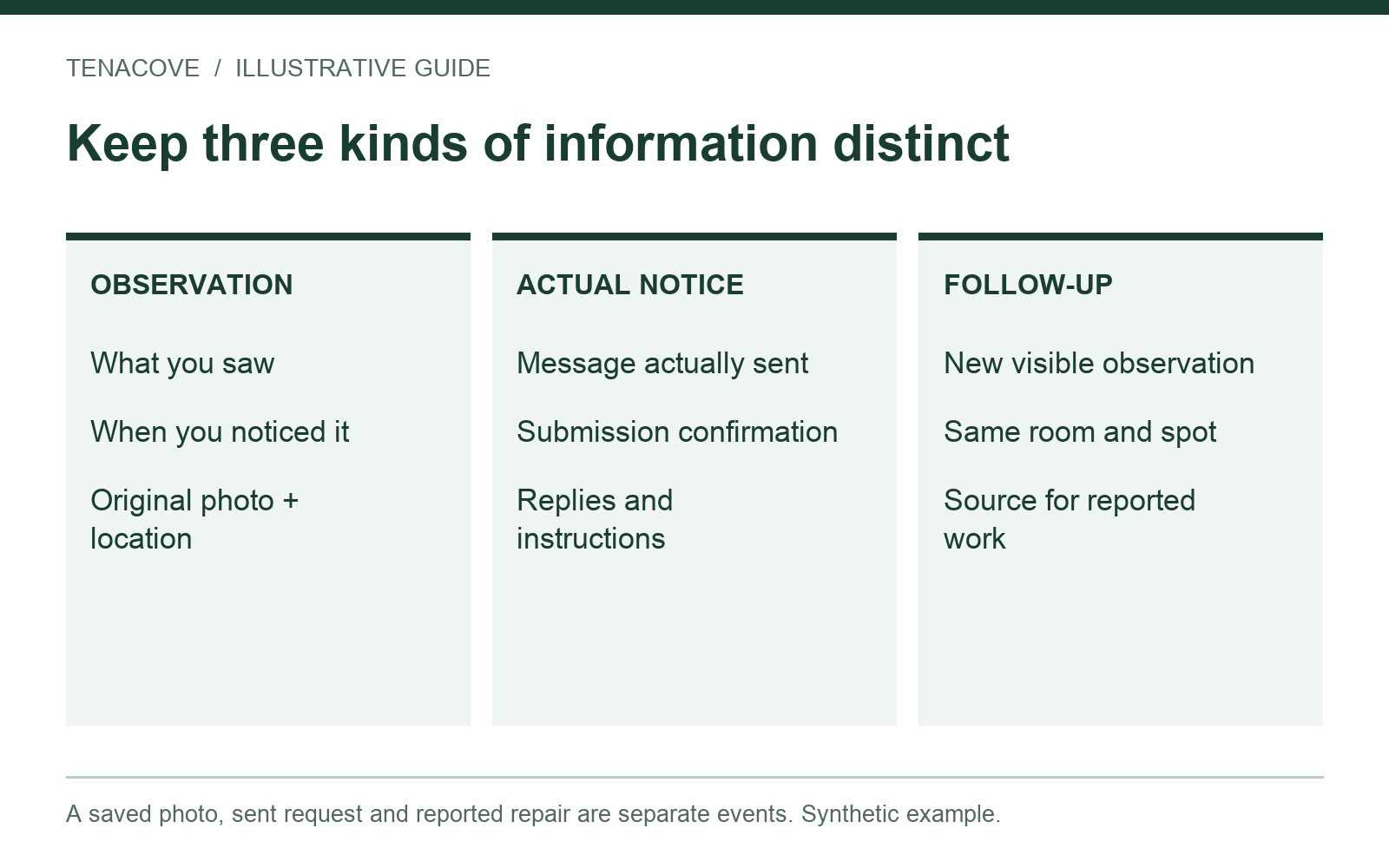
“Tuesday” can refer to three different events: when you first noticed a condition, when you took a photograph, and when you reported it. Record each one using the information you actually have. If you remember only an approximate discovery time, say so.
A practical note might read: “Noticed discoloration below the living-room east window after arriving home on October 8, around 6 p.m. Photo taken later that evening. I did not observe where water entered.” That tells a reader more than “old leak, landlord's fault.”
Keep observations and other people's statements separate
Write “maintenance message says the window seal was repaired” when that is your source. Write “no droplets visible in my October 10 photo” when that is what you observed. Neither statement becomes a professional assessment merely because both appear in one timeline.
Camera metadata, an observation date you enter and a service's file-receipt time are different records. None by itself authenticates the scene. Preserve original files and explain uncertainty rather than editing dates to make the sequence look tidier.
Send the maintenance report through the required channel
A private photo archive does not notify management. Use the phone number, portal or other reporting channel your lease or building instructions specify. For an urgent condition, do not wait to finish uploading photos or wait for an ordinary portal reply before seeking appropriate help.
A concise message identifies the unit, exact room and spot, visible condition, discovery information, current access or safety concern, and how you can be contacted. Attach relevant copies when appropriate and retain the message you actually sent. Keep its submission confirmation, ticket number, replies and any later instructions.
Use a factual message, with room for unknowns
Illustrative wording: “I noticed discoloration and visible droplets on the living-room wall below the east window this evening, October 8. I have not identified the source. I have stayed away from the affected area. Please advise on the urgent maintenance process and safe access. Attached: room view and context photo.”
Change that example to match your actual observations. Do not write that droplets were present, that an area was unsafe, or that a call was made unless that is true. A maintenance request should describe the event rather than fill a template with assumptions.
Watch on YouTube ↗
Build a follow-up sequence without rewriting the first entry
The first record is only one moment. If condition changes, add a new dated entry under the same location. Keep the earlier version, even if a later visit supplies a different explanation. A sequence is easier to review when corrections are explicit.
| Event | Photo or source | Factual note | Still unknown |
|---|---|---|---|
| October 8: first observation | Original room, context and detail photos | Discolored patch and droplets visible below east window | Entry point and duration before discovery |
| October 8: report submitted | Saved portal confirmation and attachment list | Request received under ticket W-014 in this example | When staff will inspect; receipt is not inspection |
| October 9: management update | Original message saved separately | Message states a contractor attended | Work performed, unless described in a supplied work order |
| October 10: later observation | New photo from the earlier safe viewpoint | Patch remains visible; no droplets visible in this image | Concealed condition and professional repair status |
This example contains invented dates and a fictional ticket identifier to show the structure. It is not a customer's incident, a test of repair quality or a claim that this is how quickly maintenance will respond.
If you have no photograph from before the leak
State that the earlier baseline is missing. Look for genuine existing sources that happen to show the spot, such as an old room photo or an earlier maintenance attachment. Record what is actually visible; an image with the wall hidden behind a sofa does not establish its condition.
The guide to missing move-in photos explains how to build a source index without pretending later photos recreate the past.
Keep the photo record and source documents together
Keep an unmodified copy of each original photo. Store maintenance messages, work orders, receipts and any relevant insurance correspondence in a separate source folder. Link them with the same room label or ticket reference in your index. A photo of an email screen is less useful than also retaining the actual message.
Tenacove's photo-record workflow lets you add a supported photo, room, spot, observation date and note, then compare records of the same spot. Its current Beta does not import original email threads, PDF documents or video, and it does not send your maintenance request. Keep those materials separately.
Check the archive before you need to share it
Download a complete archive periodically. Extract the full ZIP and open the report with its originals folder still beside it. Check several images and compare the notes with your source index. The rental-photo export guide walks through this check.
Before sending a copy, review unrelated belongings, documents, people and location metadata. Keep your untouched private originals separately from any sharing copies you prepare. Tenacove is an early Beta, so keep an independent backup rather than treating the app as permanent storage.
Know what the record cannot determine
A photograph can show a visible stain or surface change. It cannot by itself establish hidden damage, identify a mold species, date the start of a leak, establish fault or decide insurance coverage. Do not label a photograph “toxic mold” based on appearance.
The EPA's mold and moisture guidance explains why addressing the water problem matters. Use it as background, not as a reason to attempt cleanup or delay professional help for the sake of documentation.
If a repair disagreement turns into a rights or deadline question, use local guidance. USAGov's tenant-rights resource points renters toward state agencies and legal help. An organized archive does not replace a required notice or determine a legal outcome.
Water-damage documentation questions
Should I record a video of the leak?
Only if you can do so safely without delaying help. A video may show visible movement, but retain it outside Tenacove because the current Beta does not accept video. Still photos with location and notes remain useful for a readable record.
How often should I take follow-up photos?
Record meaningful visible changes and accessible follow-up visits rather than chasing a fixed schedule. Follow safety instructions and avoid re-entering a restricted area. If nothing was safely observed, say that instead of filling the timeline with assumed progress.
Does a closed maintenance ticket mean the problem is resolved?
It records the ticket status reported by that system. Preserve the message and keep your own later observations separate. Ask through the appropriate channel when the description of work or next steps is unclear.
Start with one clearly labeled observation
After safety and reporting are handled, choose one affected spot and give its photos, notes and message references a consistent place. For the broader sequence, use the during-lease maintenance record guide. You can keep the same structure in folders or in Tenacove; the useful part is an honest sequence that survives outside your memory.